


- Facility Maintenance

Light Duty Tilt Truck
- Forklift Attachments

Full Featured Work Platform
- Lifting Equipment
Gantry Crane
Stabilizing Jack
- Packaging Equipment
Auto Stretch Wrap Machine
- Safety and Security Equipment
- Storage Solutions
Carton Flow Rack
Cantilever Rack
Pallet Rack Guard
- Caster and Wheels


What Are the Different Types of Fork Extensions?

What Are the Different Types of Fork Extensions?
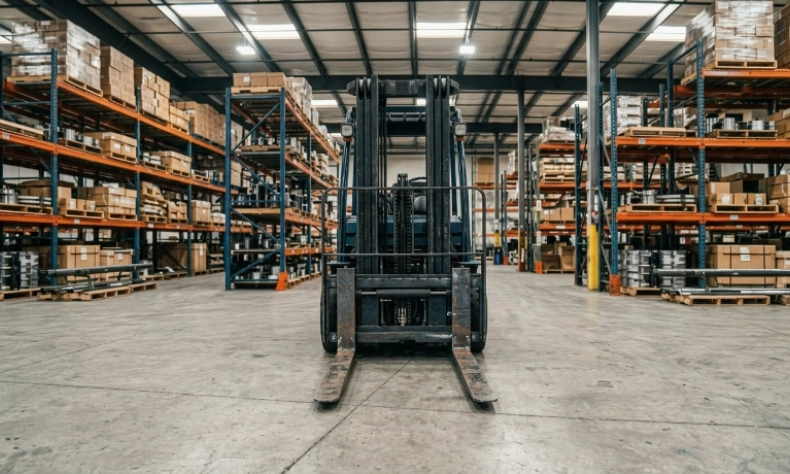
Forklifts are widely used in warehouses, factories, construction sites and other workplaces to move heavy materials. Sometimes, the standard forklift forks are not long enough to safely support a large or oversized load. This is where fork extensions can be useful.
Fork extensions are attachments that slide over the existing forklift forks to provide extra length. They can help support longer loads and make material handling easier when used correctly.
But not every extension is the same. Different jobs require different designs, materials and sizes. Understanding the main Types of Fork Extensions can help you select an option that fits your forklift and your work requirements.
What Are Fork Extensions?
Fork extensions are long attachments designed to fit over the existing forks of a forklift. They increase the usable length of the forks without requiring you to replace the original forks.
They are commonly used when a load is longer than the standard forks. For example, a warehouse may need to move long boxes, timber, pipes, sheets or other large materials. Instead of buying a different forklift, the right extension may provide the additional support needed.
However, extensions should not be treated as a way to increase the forklift’s rated lifting capacity. The forklift’s original capacity, load center and the extension manufacturer’s specifications must always be considered.
Why Are Fork Extensions Used?
The main reason businesses use fork extensions is to provide better support for longer loads. They can also make some material handling tasks more convenient.
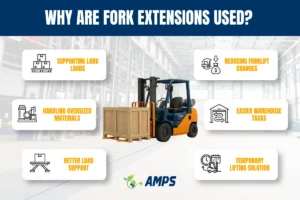
Common uses include:
- Supporting long pallets and large loads
- Handling oversized boxes and materials
- Improving load support when the standard forks are too short
- Reducing the need for certain forklift changes
- Making some warehouse tasks easier
- Providing a temporary solution for specific lifting jobs
The correct extension should always be selected according to the load, fork size and application.
What Are the Different Fork Extension Types?
There are several options available, and each one is designed for different working conditions. Below are some common fork extension types to consider.
1. Standard Fork Extensions
Standard extensions are among the most common options. They are designed to slide over existing forklift forks and provide additional length.
They can be useful for general warehouse and material handling work where loads are longer than the original forks.
Before using them, it is important to make sure the extension fits securely over the existing fork. The extension should also have enough contact with the original fork to provide proper support.
2. Heavy Duty Fork Extensions
Heavy duty fork extensions are made for demanding applications where strong and durable equipment is needed. They are often used in industrial environments and for handling large or heavy materials.
These extensions are normally made from strong materials and are designed to handle tough working conditions. However, heavy duty does not mean that an extension can automatically carry any heavy load.
The rated capacity of the extension and forklift should always be checked before use.
3. Adjustable Fork Extensions
Adjustable fork extensions offer more flexibility for different load sizes and working requirements. Depending on the design, they can provide different positioning options to suit particular applications.
They can be useful for businesses that handle materials of different sizes and do not want to use the same fixed setup for every job.
When selecting an adjustable model, check its adjustment system, maximum capacity, fork compatibility and overall construction.
4. Steel Fork Extensions
Steel fork extensions are popular because steel provides strength and durability. They are suitable for many industrial and warehouse applications.
The quality and thickness of the steel can vary between products, so buyers should not select an extension based on material alone. It is important to review the specifications, capacity rating, dimensions and intended use.
A properly selected steel extension can be a practical option for businesses that need reliable support for regular material handling.
How Do Forklift Fork Extensions Work?
The basic design is simple. The extension slides over the existing forklift fork and extends its usable length.
Most models are designed with a retaining system to help keep the extension in position during operation. The extension should be fitted correctly before lifting any material.
For safe operation, the user should:
- Check that the extension fits the existing fork
- Confirm the rated capacity
- Inspect the extension for damage
- Make sure the load is properly positioned
- Keep the load balanced
- Follow the manufacturer’s instructions
- Avoid exceeding the recommended load center
Correct fitting is important because a poorly fitted extension can affect load stability.
How to Choose the Right Extension?
Choosing the right extension depends on more than just the length. You should consider several factors before making a purchase.
Fork Dimensions
First, measure the width and thickness of your existing forklift forks. The extension needs to fit properly over them.
Extension Length
Think about the size of the loads you normally handle. An extension should provide enough support without creating an unnecessary increase in load center.
Load Capacity
Always check the rated capacity of the extension. Also consider the forklift’s rated capacity and the effect of the extended load center.
Material
The material can affect durability and performance. Steel is commonly used for industrial applications, but the exact construction and specifications should be reviewed.
Work Environment
Consider where the extension will be used. A warehouse application may have different requirements from a construction site or industrial facility.
Fork Extensions vs. Other Forklift Attachments
Fork extensions are only one type of forklift attachments available for material handling. Other attachments are designed for specific jobs, such as handling drums, cartons, rolls or other specialized materials.
The right attachment depends on the job you need to perform. If your main problem is that the standard forks are not long enough, an extension may be worth considering.
If you need to handle a completely different type of material, another attachment may be more suitable.
What Should You Check Before Using Fork Extensions?
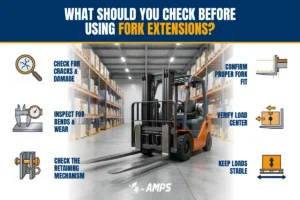 Safety should always come first when using any forklift equipment. Before starting work, inspect the extension and make sure it is suitable for the job.
Check for visible cracks, bends, excessive wear, or other damage. Also check the retaining mechanism and make sure the extension is correctly positioned on the original fork.
Never assume that a longer fork automatically means you can lift a heavier load. The forklift’s capacity and load center still matter.
Operators should also keep loads stable and avoid sudden movements. If there is any doubt about compatibility or capacity, consult the manufacturer or a qualified professional before use.
How Amps Supply Can Help
At Amps Supply, we understand that choosing the right material handling equipment can sometimes be confusing. Different businesses have different forklift models, fork dimensions, load sizes, and working conditions.
Our goal is to help customers understand their options and select suitable products for their requirements. When looking at forklift equipment, it is useful to have the basic information about your forklift and the loads you handle ready.
This includes your fork dimensions, required extension length, typical load weight and type of work. Having these details can make the selection process easier.
Whether you are comparing standard models, heavy duty options or other solutions, choosing the right equipment should always be based on proper specifications rather than appearance alone.
Common Mistakes to Avoid
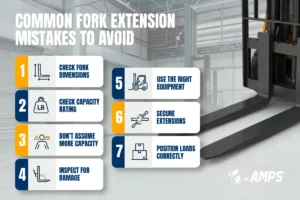 Using an extension incorrectly can create unnecessary risks. Some common mistakes include:
- Choosing an extension without checking fork dimensions
- Ignoring the manufacturer’s capacity rating
- Assuming a longer extension increases lifting capacity
- Using damaged equipment
- Failing to secure the extension correctly
- Placing loads too far forward
- Using the wrong equipment for a specialized application
Taking a few minutes to check the equipment before use can help prevent many avoidable problems.
FAQs
Amps Supply can help customers understand different extension options and choose products based on their forklift dimensions, load requirements and application. Product availability may vary, so customers should check the current specifications before ordering.
Amps Supply focuses on providing material handling solutions and helping customers understand their equipment options. Sharing accurate forklift and load information can help with selecting a suitable product.
Yes. Customers can provide details such as fork width, fork thickness, required extension length and typical load weight. These details are useful when determining which option may be appropriate.
Amps Supply can help customers explore suitable material handling options for different applications. The best choice depends on the forklift, load, workplace and specific handling requirements.
The most important service is product selection based on the forklift and application. Proper information about the equipment helps ensure that the selected extension is suitable for the intended job.
Yes. They should be inspected before use for cracks, bends, damage, excessive wear and problems with the retaining system. Regular inspection is an important part of safe equipment use.
No. Compatibility depends on the dimensions of the original forks, extension design, capacity and manufacturer requirements. Always check the specifications before use.
Start by measuring your existing forks and considering the length and shape of the loads you handle. The required length should also be considered alongside load center and capacity requirements.
No. A longer extension is not automatically better. Excessive length can affect the load center and stability. Choose a length that matches the application and manufacturer’s specifications.
Do not guess. Collect your forklift model or fork dimensions, load weight, load size and intended use. Then ask the supplier or a qualified equipment professional to help you select an appropriate option.

