


- Facility Maintenance

Light Duty Tilt Truck
- Forklift Attachments

Full Featured Work Platform
- Lifting Equipment
Gantry Crane
Stabilizing Jack
- Packaging Equipment
Auto Stretch Wrap Machine
- Safety and Security Equipment
- Storage Solutions
Carton Flow Rack
Cantilever Rack
Pallet Rack Guard
- Caster and Wheels


Types of Truck Cranes: Uses, Benefits & More?

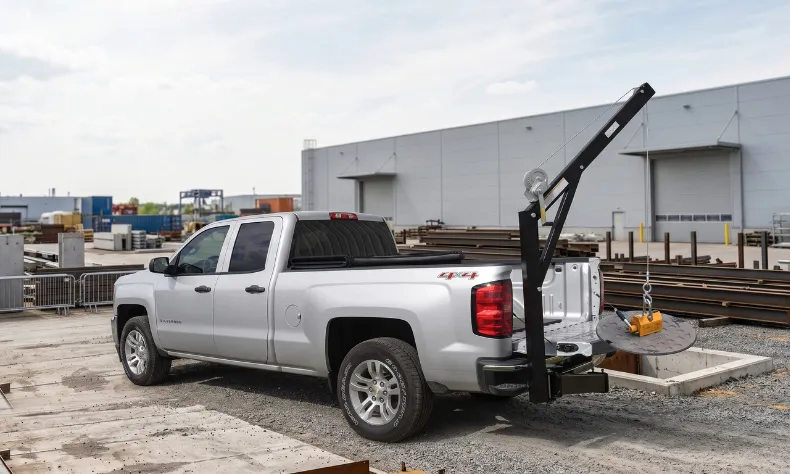
Truck cranes are useful machines for lifting, moving and placing heavy materials. They combine a truck with a crane system, making it easy to move from one worksite to another. For construction, warehouses, factories, transport companies and industrial projects, choosing the right crane is important for safe and efficient work.
In this blog, we will explain the main Types of Truck Cranes, their uses, important features and how to choose the right option.
What Is a Truck Crane?
A truck crane is a lifting machine installed on a truck or truck chassis. It allows the vehicle to carry materials and lift them at the same location. A typical truck mounted crane has a crane body, hydraulic system, boom, controls and supporting parts.
Unlike a fixed crane, a truck crane can travel between different locations. This makes it useful for jobs where lifting equipment needs to be moved often.
A crane truck can be used for:
- Loading and unloading materials
- Moving construction supplies
- Handling heavy cargo
- Lifting equipment at industrial sites
- Warehouse and factory material handling
- Transporting and placing heavy loads
The exact truck crane capacity depends on the crane model, boom length, truck size and lifting conditions.
Different Types of Truck Cranes
There are several truck crane types, and each one is designed for different jobs. Understanding these types can help you select the right machine for your work.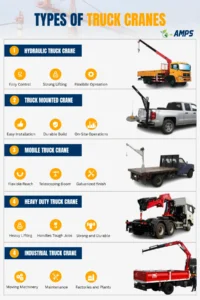
1. Hydraulic Truck Crane
A hydraulic truck crane uses hydraulic pressure to move the boom and lift loads. It is one of the most common options because hydraulic systems provide smooth and controlled movement.
Key benefits include:
- Smooth lifting and lowering
- Easy boom control
- Good lifting power
- Flexible operation
- Suitable for different work environments
The hydraulic boom can be extended or adjusted depending on the job.
2. Truck Mounted Crane
A truck mounted crane is installed directly onto a truck. The truck provides mobility, while the crane provides lifting power.
This type of truck mounted lifting equipment is useful when materials need to be transported and lifted at the same location. It can reduce the need for separate transportation and lifting machines.
Common applications include construction materials, utility work, road projects and general cargo handling.
3. Mobile Truck Crane
A mobile truck crane is designed for easy movement between worksites. Because the crane is mounted on a road going vehicle, it can travel without needing a separate transport vehicle in many situations.
This type of mobile lifting equipment can be useful for companies that work at multiple locations.
Mobile truck cranes are often used for:
- Construction projects
- Infrastructure work
- Industrial maintenance
- Equipment installation
- Material delivery and placement
4. Heavy Duty Truck Crane
A heavy duty truck crane is built for larger and heavier loads. These cranes normally have stronger structures, larger hydraulic systems and greater lifting capacity.
They are suitable for heavy load lifting in construction and industrial environments. However, the crane’s rated capacity should always be checked for the specific boom position and working condition.
A heavy duty model may be a good choice when standard lifting equipment cannot safely handle the required load.
5. Industrial Truck Crane
An industrial truck crane is designed for industrial material handling and demanding workplace applications. These cranes can be used in factories, manufacturing plants, logistics operations and large storage facilities.
Businesses may use an industrial truck crane for moving machinery, loading materials, handling large components and supporting maintenance work.
How Does a Truck Crane Work?
Understanding truck crane operation is important for safe lifting. The truck first reaches the required work area and is positioned on suitable ground. Stabilizers or outriggers are then used when required to provide better stability.
The operator controls the hydraulic lifting system to move the boom. The crane attachment, hook or other load handling tool is connected to the material. The load is then lifted carefully and moved to the required position.
The operator should consider:
- Load weight
- Load position
- Boom length
- Lifting height
- Ground conditions
- Working radius
- Weather and site conditions
- Rated lifting capacity
Correct operation helps reduce the risk of accidents and equipment damage.
Truck Crane Capacity and Lifting Capacity
One of the most important things to check before purchasing or renting a crane is its truck crane lifting capacity. It tells you how much weight the crane can safely lift under specific operating conditions.
It is important to understand that lifting capacity is not always the same at every boom position. A crane may lift a heavier load when the boom is short and close to the truck, while its capacity may be lower when the boom is fully extended.
When checking lifting capacity, look at:
- Maximum load capacity
- Working radius
- Boom length
- Maximum lifting height
- Hydraulic system specifications
- Truck size and stability
- Manufacturer’s load chart
Common Truck Crane Uses
There are many truck crane uses across construction, logistics, manufacturing and industrial operations. These machines are especially useful when lifting and transportation are both required.
Common truck crane applications include:
- Construction material handling
- Loading and unloading trucks
- Moving steel and building materials
- Installing machinery
- Handling pipes and equipment
- Utility and maintenance work
- Warehouse operations
- Industrial equipment movement
- Cargo handling
- Road and infrastructure projects
Important Truck Crane Features
Different cranes have different specifications. Before choosing one, businesses should compare the features that matter for their work.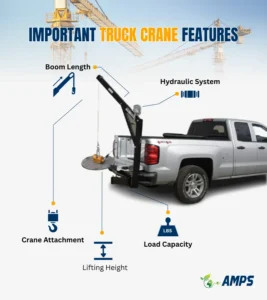
Boom Length
The boom determines how far and how high the crane can reach. A longer boom can provide greater reach, but lifting capacity can change as the boom extends.
Lifting Height
Lifting height shows how high the crane can raise a load. This is especially important for construction and equipment installation.
Hydraulic System
A reliable hydraulic system provides the power needed to extend, lower, and move the boom. Hydraulic systems are common in modern lifting equipment.
Load Capacity
The crane should have enough load capacity for the heaviest material you expect to lift. It is also important to leave an appropriate safety margin and follow the manufacturer’s instructions.
Crane Attachment
Different jobs may require different attachments. Hooks, grabs, and other tools can make a crane more suitable for specific material handling solutions.
Truck Crane Applications in Different Industries
Truck cranes are used in many industries because they offer both mobility and lifting capability.
Construction
Construction companies can use truck cranes to move steel, concrete products, pipes, tools, and other materials around a site.
Warehousing and Logistics
In logistics, truck cranes can support cargo handling and loading or unloading operations. They can also complement other warehouse lifting equipment.
Manufacturing
Factories may use industrial cranes to move machinery, components, and heavy production materials.
Utilities
Utility companies can use truck-mounted lifting equipment for maintenance, installation, and equipment transportation.
Infrastructure
Road, bridge, and other infrastructure projects often require mobile crane systems because work can take place across large areas.
Truck Crane vs Other Lifting Equipment
A truck crane is different from many fixed lifting machines because it offers mobility. A forklift may be better for short distance movement inside a warehouse, while a fixed overhead crane may be more suitable for repeated lifting in one location.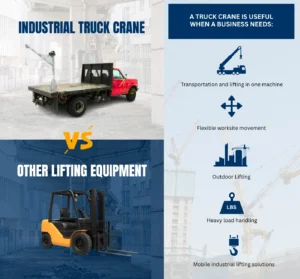
A truck crane is useful when a business needs:
- Transportation and lifting in one machine
- Flexible worksite movement
- Outdoor lifting
- Heavy load handling
- Mobile industrial lifting solutions
The best choice depends on the type of load, lifting height, working environment, frequency of use and required capacity.
Choosing the Best Truck Crane
Finding the best truck crane depends on your actual work requirements. Before making a purchase, consider the following points:
- Know your average load weight: Select a crane that can safely handle your expected loads.
- Check the required reach: Consider the boom length and working radius.
- Consider lifting height: Make sure the crane can reach the required height.
- Review the truck: The truck must be suitable for the crane and expected loads.
- Think about the work environment: Ground conditions and available working space matter.
- Check the hydraulic system: A reliable system supports smooth operation.
- Review maintenance needs: Easy servicing can help reduce downtime.
- Choose the right supplier: Work with a supplier that understands your lifting requirements.
Truck Crane Equipment from Amps Supply
At Amps Supply, we understand that every lifting job can have different requirements. Our goal is to help businesses find practical truck crane equipment and material handling solutions for their operations.
Whether you are looking for a portable Jib crane, heavy duty lifting equipment, or truck mounted crane equipment, it is important to select equipment based on the actual load, reach, and working conditions.
We can help customers understand important specifications such as lifting capacity, boom length, lifting height, and hydraulic system requirements. This makes it easier to choose suitable truck crane lifting equipment for construction, industrial, warehouse, and cargo handling work.
If you are searching for a truck crane for sale or truck crane equipment for sale, we can help you compare suitable options according to your application and lifting requirements.
Why Choose Amps Supply?
Choosing lifting equipment is not only about buying a machine. You also need reliable product information and support.
Amps Supply focuses on practical industrial material handling and lifting solutions. We can help businesses understand their requirements before selecting equipment.
Our approach includes:
- Understanding your lifting needs
- Helping compare suitable equipment
- Considering load capacity and working conditions
- Supporting equipment selection
- Providing practical information about truck mounted lifting equipment
FAQs
The main types include hydraulic truck cranes, truck mounted cranes, mobile truck cranes, heavy duty truck cranes and industrial truck cranes. Each type is designed for different lifting requirements and work environments.
Amps Supply provides information and solutions for truck crane equipment, lifting equipment and material handling needs. The team can help customers understand specifications and select suitable equipment for their applications.
Yes. Amps Supply can help you review important factors such as load weight, lifting height, boom length, working conditions and required lifting capacity before selecting equipment.
If you are looking for truck crane equipment for sale, Amps Supply can help you explore suitable options based on your requirements. Availability and specifications can vary, so it is best to discuss your specific application with the supplier.
Important services can include equipment selection, installation support, inspection, maintenance, and operator training. The exact services available depend on the supplier and equipment.
Inspection requirements depend on the crane, workplace rules, manufacturer instructions and local regulations. Regular inspection and maintenance help keep lifting equipment safe and reliable.
Start by identifying the heaviest load you need to lift. Then consider the working radius, boom position, lifting height and site conditions. Always use the manufacturer’s load chart rather than relying on a simple maximum capacity number.
No. A longer boom provides more reach, but extending the boom can reduce the crane’s available lifting capacity. Choose boom length according to the actual job requirements.
A mobile truck crane can travel between locations and perform lifting at different worksites. A fixed crane normally stays in one location and is better suited to repeated lifting within a specific work area.
Start with your load weight, required lifting height, working radius, work environment, frequency of use and transportation needs. Then compare suitable truck crane types and check the manufacturer’s specifications before making a final decision.

