

- Facility Maintenance

Light Duty Tilt Truck
- Forklift Attachments

Full Featured Work Platform
- Lifting Equipment
Gantry Crane
Stabilizing Jack
- Packaging Equipment
Auto Stretch Wrap Machine
- Safety and Security Equipment
- Storage Solutions
Carton Flow Rack
Cantilever Rack
Pallet Rack Guard
- Caster and Wheels


How Tall Should a Toe Board Be? A Contractor’s Guide

Introduction
If you are in the construction industry an extra safety measure could make a huge difference. A toe board is a device that stops tools, materials and other items from falling off platforms. It also protects employees from serious injuries. A lot of Construction Contractors, Site Supervisors, Safety Managers, Site Supervisors and Health and Safety Professionals have similar questions: How tall should a toe board be? The answer will depend on the safety rules and the kind of work site and the dangers of falling at the worksite.
What Is a Toe Board?
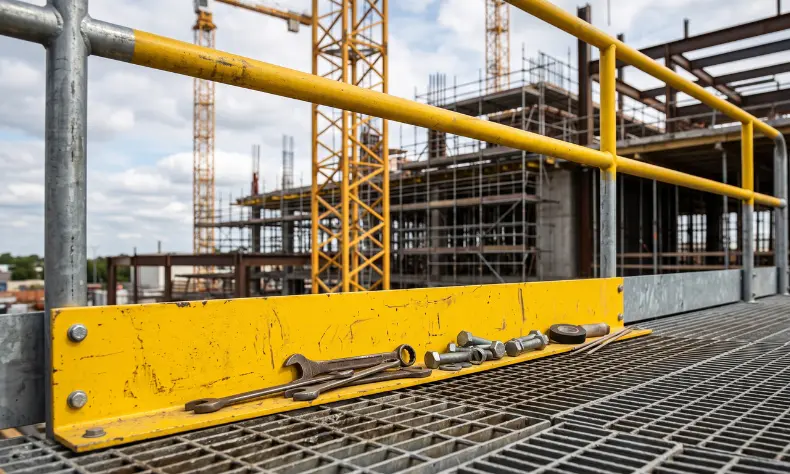
The toe Board is the protection board that is placed at the bottom of a scaffold, platform, walkway or work space that is elevated. It is part of a security system and prevents equipment, tools and materials from falling off the edge.
 A safety toe board is commonly used on:
- Construction sites
- Scaffolding
- Elevated work platforms
- Loading platforms
- Roof work areas
- Industrial maintenance projects
- Warehouse mezzanines
Toe boards are an invaluable form of falling object protection and contribute to creating a safer working environment for everyone involved.
How Tall Should a Toe Board Be?
The simple answer is that the standard toe board height required by OSHA is at least 3.5 inches (9 cm) above the walking or working surface.
The toe board should:
- Be at least 3.5 inches high
- Have no more than a 1/4-inch gap from the platform surface
- Be strong enough to withstand normal workplace conditions
- Prevent tools and materials from falling through or underneath
Following the correct toe board height helps reduce workplace hazards and improves overall site safety.
OSHA Toe Board Height Requirements
The OSHA toe board height requirement comes from OSHA’s fall protection standards for walking working surfaces.
The main OSHA toe board requirements include:
- Minimum height of 3.5 inches
- Installed along exposed edges where falling objects are possible
- Strong enough to resist expected force
- No large openings that allow materials to fall through
- Installed wherever employees are working below elevated platforms
These requirements support OSHA fall protection, construction safety standards and industrial safety standards.
Why Is Toe Board Height Important?
The correct toe board dimensions help protect workers in several ways.
Benefits include:
- Prevents tools from falling
- Stops loose materials from sliding off platforms
- Reduces injuries caused by falling objects
- Improves workplace organization
- Supports OSHA inspections
- Helps companies avoid safety violations
- Creates safer work environments
Even a small wrench dropped from height can cause serious injuries. Proper toe boards help reduce this risk.
When Is a Toe Board Required?
Many contractors ask, When is a toe board required?
A toe board is usually required when:
- Employees work on elevated platforms
- Workers are below another work area
- Materials could fall from edges
- Guardrails are installed
- Scaffolding is used
- Roof work creates falling object hazards
- Maintenance work is performed above ground level
Using toe boards is one of the easiest ways to improve workplace hazard prevention.
What Is the Purpose of a Toe Board?
 Another common question is, What is the purpose of a toe board?
Its main purpose is simple.
A toe board helps:
- Protect workers below
- Keep tools on the platform
- Reduce falling object risks
- Improve building site safety
- Support occupational safety
- Meet OSHA requirements
- Increase worker confidence
It is an important part of any edge protection system.
Toe Boards in Scaffold Safety
A toe board for scaffolding is one of the most common safety requirements on construction sites.
The recommended scaffold toe board height follows OSHA guidelines and should protect workers below from falling objects.
Scaffold toe boards are commonly installed on:
- Supported scaffolds
- Suspended scaffolds
- Mobile scaffolds
- Access platforms
- Temporary work platforms
Good scaffold safety depends on more than guardrails. Toe boards provide additional protection that should never be ignored.
Toe Boards and Guardrail Systems
A guardrail toe board works together with the rest of the guardrail system.
A complete guardrail system usually includes:
- Top rail
- Mid rail
- Toe board
- Posts
- Secure fasteners
Together, these components improve platform edge protection and help reduce accidents on busy worksites.
Choosing the Right Toe Board
Different projects require different materials.
Common toe board materials include:
- Wood
- Steel
- Aluminum
- Composite materials
The best choice depends on:
- Weather conditions
- Load requirements
- Project duration
- Work environment
- Maintenance needs
Always select materials that meet local construction regulations.
Common Toe Board Installation Mistakes
Even experienced contractors sometimes make mistakes during installation.
Avoid these common problems:
- Installing boards below minimum height
- Leaving large gaps underneath
- Using damaged materials
- Loose fasteners
- Missing sections along platform edges
- Ignoring damaged toe boards
- Poor maintenance
Regular safety inspections help identify these issues before accidents happen.

Best Practices for Contractors
Every contractor should follow these safety practices.
- Check toe boards before each shift.
- Replace damaged boards immediately.
- Keep work platforms clean.
- Train employees on falling object hazards.
- Inspect scaffolding regularly.
- Follow OSHA guidelines.
- Document inspections.
- Use quality materials.
These simple steps improve work at height safety and reduce workplace risks.
Industries That Use Toe Boards
Toe boards are used in many industries, including:
- Commercial construction
- Residential construction
- Warehousing
- Manufacturing
- Shipyards
- Industrial plants
- Maintenance facilities
- Distribution centers
Every workplace that has elevated work areas benefits from proper protective barriers.
How Toe Boards Improve Jobsite Safety
Small safety improvements often prevent major accidents.
A properly installed toe board helps:
- Protect employees below
- Reduce equipment damage
- Prevent project delays
- Improve inspection results
- Support safety culture
- Lower accident risks
- Increase worker confidence
This is why toe boards remain one of the most important safety barriers on construction sites.
Why Contractors Should Never Ignore Toe Boards
Some contractors focus only on guardrails, but toe boards are equally important.
Without toe boards:
- Small tools can fall
- Materials may slide off platforms
- Workers below remain exposed
- OSHA violations become more likely
- Insurance risks may increase
Following the correct safety requirements protects both workers and businesses.
FAQs
Amps Supply offers Material Handling Equipment, Ergonomic Solutions, Loading Dock Equipment, Lifting Equipment, Facility Maintenance products, Industrial Ladders, Storage Solutions and many other workplace safety and handling products.
Amps Supply serves construction companies, warehouses, manufacturing facilities, logistics businesses, industrial plants and commercial workplaces.
Yes. Along with material handling products, Amps Supply provides equipment that supports workplace safety, productivity, storage, lifting and maintenance.
Amps Supply focuses on reliable equipment, quality products, dependable service and solutions that help businesses improve workplace safety and efficiency.
Yes. Our equipment supports safer material handling, organized storage, lifting operations, loading docks and daily workplace activities.
Yes. We supply pallet trucks, stacker equipment, storage solutions, forklifts accessories, drum handling equipment and many other warehouse products.
Yes. Construction companies use our lifting equipment, industrial ladders, safety equipment, material handling products and workplace maintenance solutions.
The standard OSHA requirement is a minimum height of 3.5 inches above the working surface.
A toe board is generally required whenever there is a risk of tools or materials falling from elevated platforms and workers are below.
A toe board helps prevent tools, materials and equipment from falling off elevated platforms, improving worker safety and supporting OSHA compliance.